

Noso Environmental Visual Identity and Web Design
Research-driven design and visual identity for a company doing the work of building a more sustainable community.
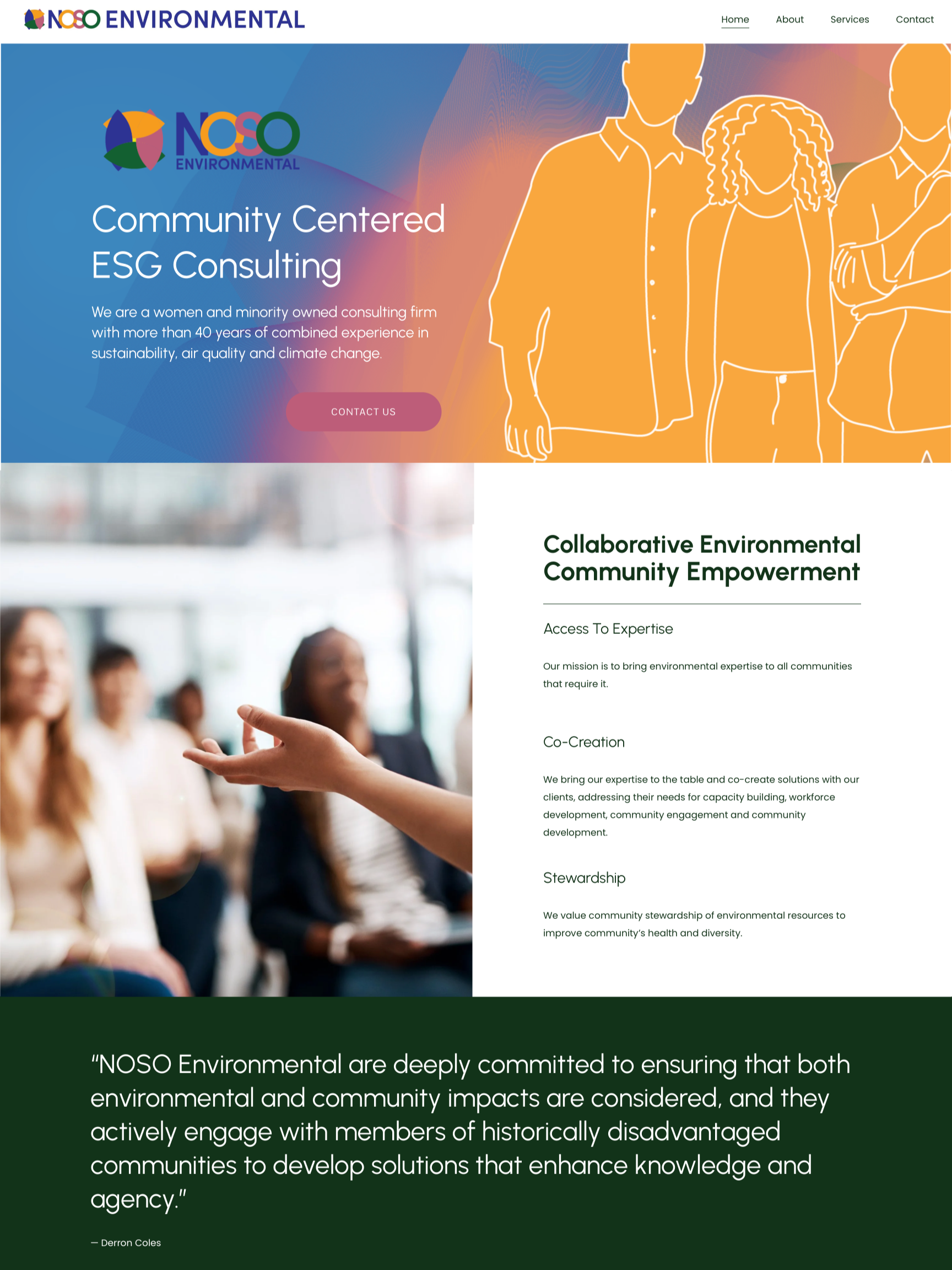
NOSO Environmental is a women- and minority-owned ESG consulting firm doing real community and climate work — the kind of mission-driven client I love working with. As a growing business, they needed a visual identity and a website that did more than look professional: together, they needed to build trust quickly, make NOSO's expertise easy to access, and open the door to new collaborations.

Project Scope
The CSG company NOSO Environmental hired me to create their visual identity and website to promote their business.
What I did:
Created NOSO’s visual identity, including custom illustrations
Led UX design for the website, from research through final build
Grounded every decision in user needs, not just aesthetics
Tools
Figma
Squarespace
Adobe Illustrator
Google Forms
Timeline
6 months
Impact
I led the design of this company’s business website to help my clients direct potential customers to their website for more information. The site also gives potential customers a way to contact them for project collaboration. The website is not public, but shared when my clients meet someone who may need their services.
Problem
My clients didn’t have a way to bring in more of their own clients and provide more information about their company quickly.
Potential clients didn’t have a way to revisit information that had been talked about during a consultation.
Creating a website for NOSO Environmental was important so they could leave a lasting impression on potential clients, provide easy access to their services, and open the door to project collaboration.
Constraints
This project originally had a three-month timeline; however, the clients were running this business on the side of their full-time jobs until it grew into a full-time job itself. I stayed flexible with deadlines throughout, encouraged open communication, and remained accommodating to their shifting availability — something I could relate to as a fellow entrepreneur balancing multiple priorities.
The client trusted my creative judgment on several customized illustrations, which let us limit revision rounds and stay within budget.
User surveys showed that a portfolio to showcase previous projects was important to users. Since the budget was already allocated across other phases, we planned the portfolio for phase two instead.
Research & Discovery
Stakeholder interview to find out what was important to the stakeholders for this project
Competitive analysis to see what other competitors feature on their website
User surveys to see what was important to the users to see on a website when working with an ESG company
My research shaped several decisions throughout the design process. When I interviewed stakeholders, they identified a portfolio as a priority after I raised it as an option. User surveys confirmed this — every participant selected a portfolio as important. Since the budget was already allocated across the project’s phases, I proposed a “Clients Worked With” section featuring client logos instead, along with a client reviews section to build credibility in place of a full portfolio.